Winter Fence Installation in Ontario | Fencecore Inc.
Can You Install a Fence in Winter in Ontario?
Overview
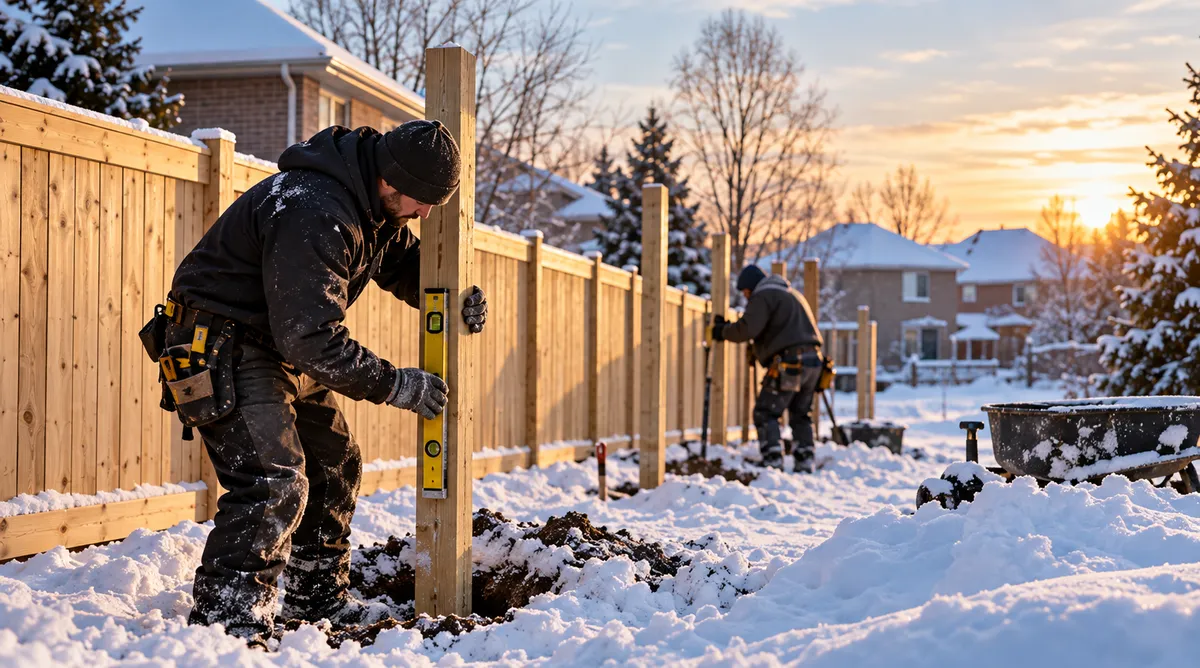
Yes, winter fence installation in Ontario is possible, and plenty of fences go in after the ground freezes. What changes is the method, not the standard. Posts still have to reach below the frost line, which sits 4 feet or more down in the GTA, so frozen ground calls for power augers or thawing the ground before digging, and concrete that cures in the cold needs protection while it sets. Fencecore installs through late fall and winter for commercial and residential clients, and off-season jobs usually get on the schedule faster than spring work.
Planning a fence before spring? Fencecore Inc. serves Brampton and the GTA all winter. Request a quote to get started and hear back fast.
Why Fall and Winter Fence Installs Are More Common Than You Think
Most people picture fence season as May through August. That's when the phones ring the most, but it isn't the only time fences get built in Ontario.
Commercial and Construction Work Doesn't Stop for Frost
Construction sites, industrial lots, and commercial properties run on their own timelines. A general contractor closing in a building in January still needs the perimeter secured. A trucking yard that gets its fence cut in December doesn't wait until April to fix it. A facilities manager with an approved budget wants the work done before the budget year closes.
That's why chain link, gates, and repairs keep moving through an Ontario winter. The crew, the equipment, and the finished product are the same as in July. Fencecore's chain link work is installed to the standard accepted at Pearson International Airport, and that standard doesn't get relaxed because it's cold out. The only real change is how the holes get dug.
Shorter Wait Times Than Spring
Spring is when every homeowner who put off a fence project picks up the phone at once. Calendars fill, lead times stretch, and the job you wanted done by the long weekend gets pushed into summer.
Late fall and winter are quieter. If your project suits cold-weather work, booking it now usually means an earlier start date and a crew that isn't racing to the next job. And if your project is better built in spring, winter is still the time to get it quoted and on the calendar before the rush.
How Posts Get Set Below the Frost Line in Frozen Ground
The frost line is the depth the ground freezes to in winter. Anything set above it moves when the soil freezes and thaws. That's why a post's footing has to sit below it, whatever month the fence goes in.
Augers, Ground Thawing, and Digging Through Frost
The top layer of frozen ground can be as hard as pavement. Hand digging through it isn't realistic, so winter installs rely on the right equipment: power augers that can cut through frozen soil and, where needed, thawing the ground at each post location before digging.
Once the crew gets through the frozen crust, the soil underneath is often workable. The target doesn't change. Every post goes 4 feet or more deep, below the frost line, which is the same standard Fencecore uses in summer. A post set short in winter because the digging was harder will heave in spring just like a post set short in August. Cutting that corner is how a fence ends up leaning after its first freeze-thaw season.
Concrete Curing in Cold Weather
Concrete doesn't gain strength properly if it freezes before it cures. In cold weather, crews protect fresh footings so they can set the way they're supposed to. That can mean covering and insulating the footings, using concrete mixes made for cold conditions, and giving the posts time before fabric or panels are tensioned against them.
Done right, a winter footing ends up as solid as a summer one. Done wrong, the concrete can crack or weaken and the post loosens by spring. If you're getting winter quotes, ask each contractor how they handle curing in the cold. A clear, specific answer is a good sign. A shrug is not.
Have a site or yard that can't wait for spring? Request a quote and Fencecore will get back to you fast with a clear schedule.
When a Winter Install Makes Sense and When to Wait
Not every project belongs in January. Here's a straightforward way to think about it.
Projects That Are Fine to Build Now
Commercial and industrial chain link perimeters
Fencing that has to go up on a construction schedule
Security upgrades and new gates on commercial properties
Repairs after vehicle impact, theft, or storm damage
Residential chain link and gate work where the site is easy to reach
If the crew can get to the fence line and the posts can go below the frost line, cold weather on its own is not a reason to wait.
Projects Better Booked for Spring
Some jobs are better planned now and built later. If equipment has to cross landscaped yards, gardens, or new sod, frozen and snow-covered ground makes it harder to protect. Deep snow can also hide the property line and the grade you're building along, and some residential projects simply come out cleaner once the yard has thawed.
For these, winter still does a lot of work for you. Get the quote, settle the materials and layout, talk to your neighbour if the fence sits on a shared line, and lock in a spring install date before the calendar fills.
Frequently Asked Questions
Can you install fence posts in frozen ground in Ontario?
Yes. Fence posts can be installed in frozen ground using power augers or by thawing the ground at each post location before digging. The post still has to reach below the frost line, and the concrete needs protection while it cures. The equipment changes in winter, but the depth standard doesn't.
How deep do fence posts need to go in the GTA?
Fence posts in the GTA need to sit below the frost line, which is 4 feet or more deep. Fencecore digs every post 4 feet or more deep so the footing sits in soil that doesn't freeze. Posts set shallower are lifted by frost over the winter, which is what causes leaning fences in spring.
Does concrete set properly in cold weather?
It does when it's protected. Concrete that freezes before it cures loses strength, so winter footings are covered and insulated and poured with mixes suited to the cold. With those steps, a footing poured in winter holds as well as one poured in summer.
Is a winter fence install faster to schedule than spring?
Usually, yes. Spring is peak fence season in Ontario and contractor calendars fill quickly, while late fall and winter are quieter. Commercial jobs and easy-access residential projects can often start sooner in the off-season, and spring projects benefit from being quoted and booked over the winter.
Want your fence built before spring, or an early spring date locked in? Fencecore is a fencing contractor in Brampton that installs through the winter across the GTA. Request a quote and expect a fast callback.