How Much Does a Fence Cost in Ontario? | Fencecore Inc.
An Honest Breakdown by Material
Overview
Fence cost in Ontario typically runs anywhere from about $25 per linear foot for basic chain link to $400 or more per linear foot for frameless glass, and the spread comes down to four things: material, length, terrain, and how deep the posts go. Most homeowners compare quotes on the first number they see and never ask what is happening below grade, which is where the real cost difference lives. A fence installed with shallow posts will heave, lean, and need work within a few Ontario winters, and by then the cheap quote has cost more than the fair one. Fencecore prices work the way it installs it, with posts set below the frost line and the number on the quote matching the number on the invoice. What follows is a straight breakdown of what drives fence cost in Ontario and what you are actually paying for.
Want a real number for your property? Fencecore serves Brampton and an 80km radius across the GTA. Get a free quote to get started.
What Actually Drives Fence Cost
Material, Length, and Terrain
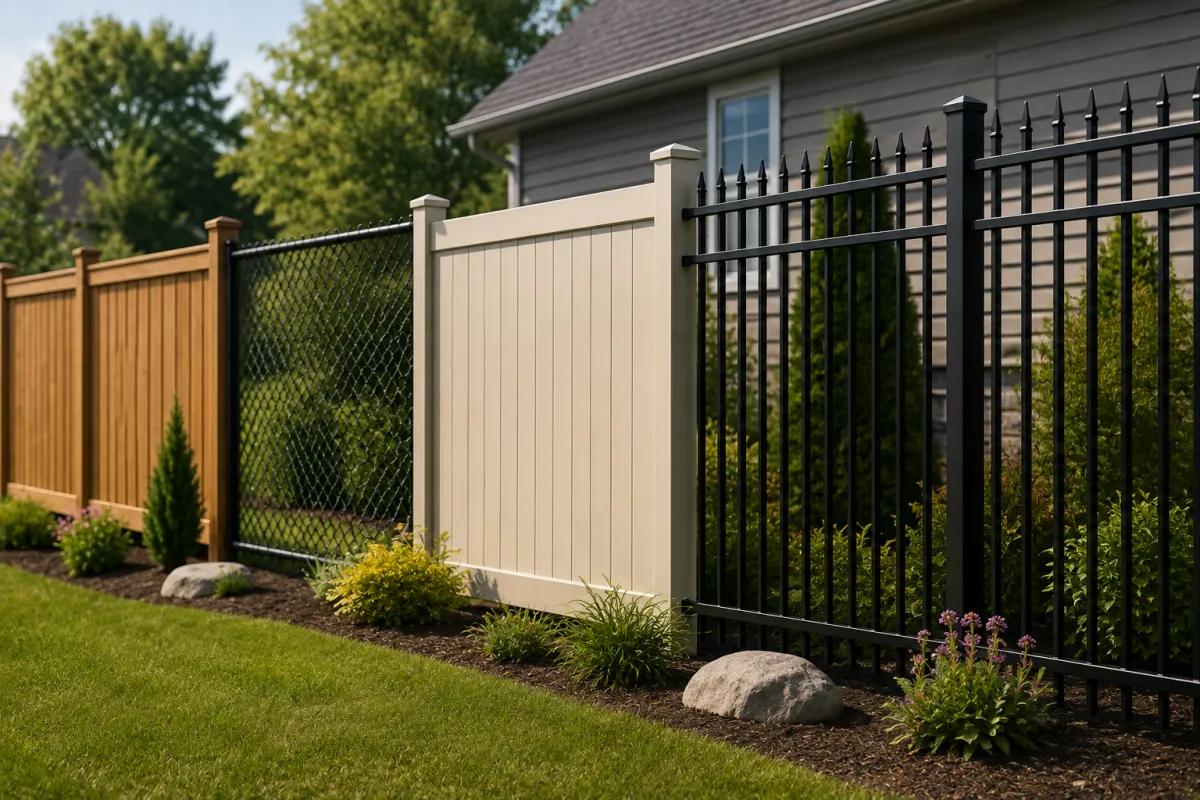
Material is the biggest single lever on price. Chain link is the most affordable option per foot, wood sits in the middle, vinyl and aluminum step up from there, and glass is a category of its own. Within each material there is another spread. A 20 gauge chain link and a 9 gauge chain link are not the same fence, and thin-wall vinyl and reinforced vinyl are not either.
Length matters, but not the way most people assume. A longer run does bring the per-foot cost down slightly because mobilization, layout, and setup get spread across more footage. The savings are real but modest. Nobody should plan a fence line around chasing a volume discount.
Terrain is the factor homeowners underestimate most. A flat, open, rectangular backyard is the cheapest fence you will ever buy. Slopes require racking or stepping the panels. Rock, heavy clay, and tree roots slow the digging. Existing structures, retaining walls, and property line complications all add labour hours that a per-foot estimate off a satellite image will never capture.
Post Depth, Labour, and Site Access
Ontario's frost line is the reason fencing here costs more than fencing in a warmer climate, and it is the line item most often quietly skipped. Frost pushes soil upward as it freezes. If the concrete footing sits above that depth, the ground lifts the post, and the fence comes with it. Fencecore digs posts 4ft or more below the frost line, which is the same standard used on commercial and security work. That takes more equipment time, more concrete, and more labour. It also means the fence is still straight in year ten.
Site access is the other hidden driver. If a machine can get into the backyard, the dig is fast. If everything has to be hand-dug through a narrow side gate, the labour hours climb. That is not a markup, it is the job actually being harder.
Cost Ranges by Fence Type
These are working ranges for installed fencing in Ontario, not quotes. Every property changes the math.
Wood, Vinyl, and Chain Link
Chain link generally runs about $25 to $50 per linear foot installed for residential work. Height, gauge, coating, and whether the fence is galvanized or black vinyl-coated all move the number. It is the most cost-effective way to enclose a large area, and it is why it dominates commercial and recreational sites.
Pressure-treated wood privacy fence typically lands around $45 to $95 per linear foot installed. Board-on-board and lattice-top styles cost more than a standard solid panel because they use more lumber. Cedar costs more than spruce. Staining and sealing are separate, either up front or in year two.
Vinyl usually falls around $60 to $120 per linear foot installed. The spread here is wider than people expect because vinyl quality varies enormously. Thin, unreinforced panels are cheap for a reason, and they get brittle and start cracking after a few Ontario freeze-thaw cycles. Reinforced panels with proper UV stabilizers cost more and last decades.
Aluminum, Glass, and Custom Gates
Aluminum generally runs about $70 to $140 per linear foot installed. It gives you the wrought iron look without rust or repainting, and it is a common choice for pool enclosures because it meets Ontario pool code cleanly. Picket spacing, height, and rail count all affect price.
Glass fencing and railing is the premium end. Framed and post-supported glass typically starts around $200 per linear foot installed. Frameless glass usually runs $300 to $500 or more per linear foot depending on glass thickness, panel size, and hardware. Fencecore works directly with a manufacturer, which keeps glass pricing more competitive than most contractors can offer on the same product.
Custom and ornamental gates are priced per gate, not per foot. A standard single walk gate is often a few hundred dollars. A custom double driveway gate in aluminum or steel can range from about $4,000 to $15,000 or more depending on span, design, and material. Adding automation, which means the operator, power, safety sensors, and access controls, commonly adds another $3,000 to $8,000.
Get a straight number instead of a range. Send Fencecore your property details and you will get a real quote back fast.
Why the Cheapest Quote Usually Costs More
Shallow Posts, Thin Materials, and Callbacks
When one quote comes in dramatically under the others, the money came out of somewhere. Usually it came out of post depth, because that is the part nobody inspects and nobody can see. A footing set 2ft down instead of 4ft saves the installer real time and concrete on every single post. It also guarantees the fence moves.
The second place it comes out is material grade. Lighter gauge chain link, lower grade lumber, unreinforced vinyl panels, thinner aluminum extrusions. On install day two fences look identical. Three or four winters in, they do not.
The third place is finishing. Gates that are hung fast rather than hung true start to sag. Fasteners that are not rated for pressure-treated lumber corrode. Panels that are not properly racked on a slope leave gaps at the bottom.
A fence that has to be straightened, re-hung, or replaced at year six is not a bargain. Most homeowners who call Fencecore about a leaning fence are not calling about a fence Fencecore built.
What a Fair Quote Includes
A quote worth trusting tells you what you are buying. It should specify material and grade, fence height, post spacing, post depth, gate count and type, hardware, and what happens to the old fence and the excavated material. It should tell you whether the number covers permits and locates. It should be a fixed number, not an estimate that grows once the digging starts.
At Fencecore, the number written on the quote is the number on the invoice. Callbacks happen for damage, from a vehicle or weather or a tree coming down. They do not happen because the work came undone.
Frequently Asked Questions
What is the cheapest type of fence to install in Ontario?
Chain link is the least expensive fencing to install in Ontario, generally around $25 to $50 per linear foot installed. It is the most cost-effective way to enclose a large area, secure a yard, or contain pets, which is why it is standard on commercial, industrial, and recreational sites. If privacy is the goal rather than containment, pressure-treated wood is usually the cheapest option that actually blocks sightlines.
Why do fence quotes vary so much?
Because the quotes are usually not for the same fence. The two biggest hidden variables are post depth and material grade. A contractor setting posts 2ft deep in lighter gauge material can legitimately quote thousands less than one setting posts 4ft or more below the frost line in heavier stock. Both fences look the same the week they go up. Ask every contractor for post depth and material specification in writing and most of the price gap explains itself.
Does a longer fence cost less per foot?
Slightly, yes. Mobilization, layout, equipment setup, and travel are largely fixed costs, so spreading them across 300 feet lowers the per-foot rate compared to a 60 foot run. The effect is real but small, usually a modest percentage rather than a dramatic discount. Terrain and access will change your per-foot price far more than total length will.
What is the most cost-effective fence long term?
Over a 20 to 25 year horizon, aluminum and quality vinyl usually win on total cost of ownership. Both cost more up front than wood but need essentially no maintenance, no staining, no sealing, and no board replacement. Wood has the lowest entry price for privacy but needs sealing every few years and will eventually need boards replaced. Whatever the material, the single biggest factor in long-term cost is post depth, because a properly footed fence in any material outlasts a shallow one.
Stop comparing guesses. Fencecore offers free quotes across Brampton and the GTA, with fixed pricing and posts set below the frost line. Get a free quote today.