
Temporary Construction Site Fencing GTA | Fencecore Inc.
Overview
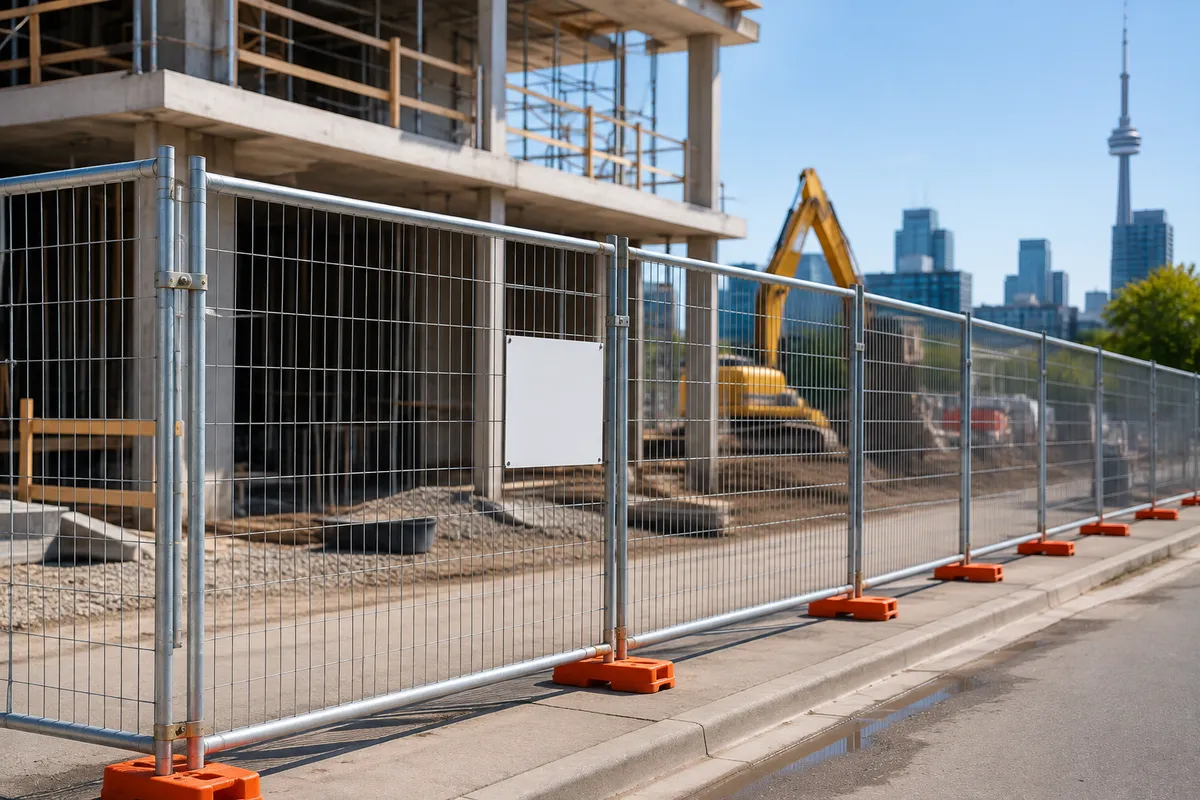
Temporary construction site fencing in the GTA is a legal requirement on most active job sites, not an optional line item, and it exists to keep the public out and liability off the contractor. Municipalities across the GTA require an enclosure around excavation, demolition, and active construction areas, and the standard is generally a minimum 1.8m hoarding or panel fence in sound condition for the duration of the work. The part that actually decides whether temporary fencing is a headache is scheduling. Fencing that shows up late holds up the whole site, and fencing that does not get pulled on time holds up the handover. Fencecore supplies, installs, and removes temporary fencing across the GTA for builders, general contractors, and event sites, with the same reliability that made it a trusted fencing sub for years.
Need site fencing on a date you can count on? Fencecore covers Brampton and an 80km radius across the GTA. Get a free quote to get started.
When and Why Job Sites Need Temporary Fencing
Site Security, Liability, and Code
The first reason is legal. Municipal by-laws across the GTA require construction and demolition sites to be enclosed, and building permits are commonly conditional on it. An unfenced excavation is an occupier's liability exposure that no contractor wants their name attached to, and an inspector who finds a site open can stop the work.
The second reason is theft. Copper, tools, materials, and equipment walk off open sites constantly, and the GTA is no exception. A perimeter that is actually secure, with panels properly connected and gates that lock, is far cheaper than replacing a skid of material or a compressor.
The third reason is simply keeping people out. Kids take shortcuts. Pedestrians cut through. Neighbours wander in to look at the progress. A proper enclosure removes the question entirely and protects everyone including the crew working inside it.
Construction, Demolition, and Event Applications
New build residential and commercial sites are the most common application, with the fence going up before the excavator arrives and coming down at substantial completion. Phased sites often need the fence line moved partway through as the work area shifts.
Demolition has stricter needs. Dust, debris, and falling material mean the enclosure usually needs privacy screening or solid hoarding rather than open panels, and it needs to be braced for the added wind load that screening creates.
Outside construction there is a steady stream of shorter-term work: festivals, parking and crowd control, storage yards, emergency enclosures after a vehicle impact or storm damage, and pop-up secure compounds. These are short jobs but they are almost always urgent, and the contractor who can actually be there tomorrow gets the call.
What Separates Reliable Temporary Fencing From the Rest
Panel Stability, Bracing, and Wind Load
Most temporary fence failures are wind failures, and most wind failures are bracing failures. Free-standing panels on concrete blocks are stable enough on their own, but the moment privacy screen or debris netting goes on, that fence becomes a sail. Screened fence lines need additional bracing, weighted feet, and often stakes or ballast well beyond what an unscreened run needs.
Panel connection is the other common weak point. Panels joined with proper couplers at both top and bottom behave as a continuous run and share load. Panels loosely clipped in one place act as individual pieces and lever each other over.
Gates need the same attention as any permanent gate. A temporary vehicle gate takes constant heavy use, gets driven into occasionally, and still has to close and lock at the end of every shift. Hanging it on undersized posts is the fastest way to end up with a gate propped open, which effectively means an open site.
Install and Removal on the Contractor's Timeline
On a construction schedule, fencing is a predecessor task. Nothing meaningful starts until the site is enclosed. A fencing sub who slips two days does not lose two days of fencing, they lose two days of the entire project, and that flows through every trade behind them.
Removal matters just as much, and it is where most fencing subs get sloppy. Landscaping, final grading, paving, and handover all wait on the fence coming out. It needs to come out on the day it is scheduled, and the site needs to be left clean, with block, ballast, and hardware taken away rather than piled in a corner for someone else to deal with.
The practical test of a temporary fencing supplier is not the fence. Any panel fence looks about the same. The test is whether the dates hold.
Have a start date you cannot move? Send Fencecore the site details and schedule and you will get a straight answer and a quote back fast.
How Fencecore Handles Temporary Fencing for GTA Contractors
Scheduling, Delivery, and Setup
The process is deliberately simple. Site details and the fence line come in, a fixed quote goes back, and dates get locked for both installation and removal. Fencecore blocks the crew and the material against those dates rather than treating them as approximate.
On site, the layout gets walked before anything is set, because the fence line on a drawing and the fence line that actually works around the laydown area, the site trailer, and the delivery route are frequently not the same. It is much cheaper to sort that out during the walk than to move 300 feet of panel afterward.
If the site is phased and the enclosure needs to move as the work progresses, that gets planned in from the start so the relocations are scheduled work rather than an emergency call.
Working as a Reliable Sub on Active Sites
Fencecore built its business as a subcontractor, primarily for landscaping companies, general contractors, and fence manufacturers across the GTA. That is a different job than residential work. It means showing up when the site is ready and not before, working around other trades without becoming their problem, keeping the area clean, and communicating when something changes.
The install standard does not drop because the fence is temporary. The crew is union-trained through Local 183, and the same people install permanent chain link and security fencing to a standard accepted at Pearson International Airport.
The reason contractors keep a fencing sub on speed dial is not price. It is that they never have to think about it. That is the position Fencecore aims for on every site.
Frequently Asked Questions
How much does temporary construction fencing cost in the GTA?
Temporary construction fencing in the GTA is typically priced per linear foot for the rental period plus install and removal, and it commonly works out to a few dollars per linear foot per month for standard panel fencing on a longer job. Adding privacy screening, debris netting, solid hoarding, or vehicle gates increases the cost. Short-term rentals of a few days or weeks carry a higher effective rate because the install and removal are the same work regardless of duration. Every site gets a fixed quote rather than an estimate.
How fast can temporary fencing be installed?
A standard panel fence line on an accessible site typically goes up in a single day, and many GTA sites can be scheduled within a few days of the quote being approved. Urgent enclosures, such as securing a site after storm damage or a vehicle impact, can often be handled faster. Larger sites, screened or hoarded runs, and jobs needing multiple vehicle gates take longer to plan but still usually install inside a day or two.
Do you handle removal when the job is done?
Yes. Removal is scheduled and quoted with the installation, so the date is set before the fence ever goes up. Panels, blocks, ballast, and hardware all come off site, and the area is left clean for the trades that follow. On phased sites, relocations partway through the project can be scheduled the same way.
Can you fence event and non-construction sites?
Yes. Fencecore installs temporary fencing for festivals and events, crowd and parking control, storage and equipment compounds, and emergency enclosures after damage. Non-construction jobs are usually shorter and more time-sensitive, so the priority is confirming the date and getting the layout right before the panels arrive.
Secure the site, hit the schedule, and hand it back clean. Fencecore offers free quotes on temporary fencing across the GTA. Get a free quote today.


Premium fencing solutions across the Greater Toronto Area. Delivering quality workmanship, durable installations, and reliable service backed by 25+ years of experience.
About
Services
Residential Fence Installation
Gate Installation & Repair
Glass Pool & Deck Fencing
Commercial & Security Fencing
Service Areas
Brampton
Mississauga
Vaughan
Oakville
© 2026 FenceCore - All Rights Reserved.